Our Hydrogen Refuelling Station System provides efficient, fast, and safe hydrogen fuelling for vehicles. With advanced technology, high-pressure storage, and robust safety features, it supports both commercial and passenger fleets. Designed for sustainability, it accelerates the shift to clean hydrogen transportation, reducing emissions and fostering a greener future.
Send Inquiry
One- Stop Hydrogen Solutions
1. We have design, engineering supply, installed and commissioning of green hydrogen project.
2. Provide the feasibility/reliability study of Green hydrogen and their derivatives i.e Ammonia, E-Methanol, Ethanol ,SAF etc..
| Power Supply | 230V AC 50Hz 10A |
|---|---|
| Ambient Temperature | -20°C to +40°C |
| Refuelling Pressure | 350 bar or 700 bar |
| Operating Temperature | -40°C to +85°C |
| Nozzle Options | Multiple nozzle and breakaway configuration |
| Flow Capacity | Standard Flow- 3.6kg/min |
| High Flow-7.2 Kg/min-H35 Filling only | |
| Split Flow Configuration Available | |
| Pneumatic supply | Dry air, pressure of 10 bar |
| Hydrogen Quality | Must comply SAE J2719, ISO 14687 or DIN EN 17124 standards |
| Refuelling Equipment | WEH TK17 35MPa or 70MPa with IR |
| Flow Meter Technology | Coriolis Mass Flow Metering |
| Fuelling Protocols | SAE J2601 | SAE J2601-2 |
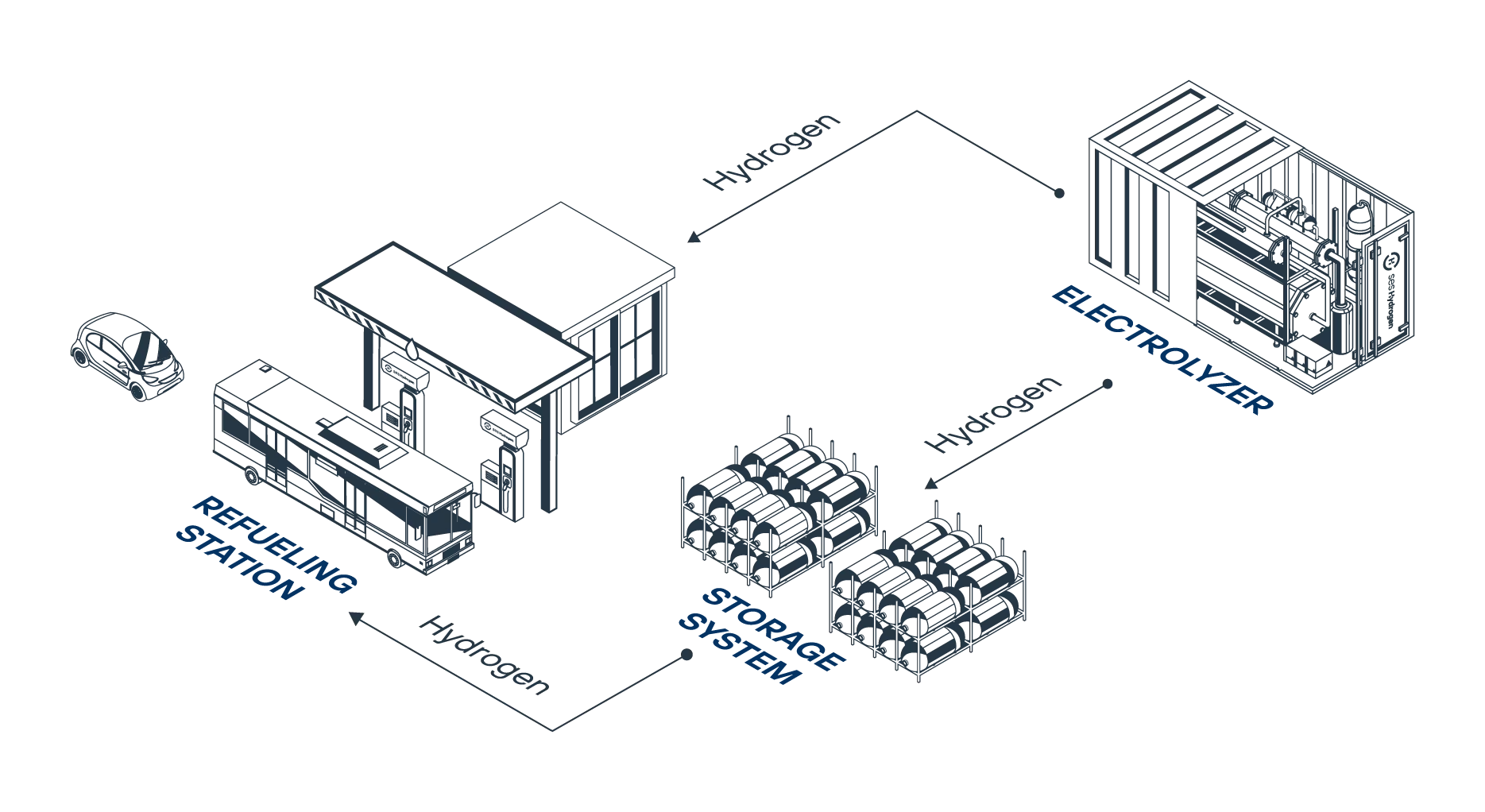
A hydrogen refueling station stores hydrogen gas, compresses it to high pressure, cools it down, then dispenses it into fuel cell vehicles through a standard nozzle. A passenger car refuels in about 3-5 minutes, similar to gasoline. We have different pressure configurations—350 bar for buses and heavy trucks, 700 bar for passenger cars. It’s straightforward infrastructure. Hydrogen in, storage, compression, dispensing.
High-pressure storage cylinders storing hydrogen. Compressors raising pressure to dispensing levels. Pre-cooling system chilling hydrogen to -40 degrees Celsius before fast-fill to prevent vehicle tank overheating. Dispensers—customer-facing pumps with standardized nozzles. Safety systems—leak detectors, automatic shutoff, pressure relief, breakaway couplings. The whole package designed to be safer than comparable petroleum infrastructure.
Absolutely. Hydrogen’s extremely low density means it rises and disperses rapidly in air—doesn’t pool like gasoline or diesel. Modern HRS designs follow SAE J2601 and other international safety codes. Automatic shutdown, ventilated enclosures, fire suppression systems. Safety profile is actually comparable to CNG stations. Concerns about hydrogen safety are mostly unfounded—it’s well-established technology.
Early pilot phases. Indian Oil has pilot stations, NTPC and GAIL running programs, state governments in Gujarat, Delhi, and Haryana supporting development. As a company combining electrolyser manufacturing with HRS capabilities, we’re positioned to deliver integrated green hydrogen infrastructure as India’s hydrogen corridor develops.
Dual-pressure dispensing handles light-duty passenger cars and SUVs at 700 bar, heavy buses and trucks at 350 bar, hydrogen forklifts, and in future, hydrogen trains and maritime applications. Single-station dual-pressure design maximizes utilization in India’s early hydrogen mobility market when demand is still developing.