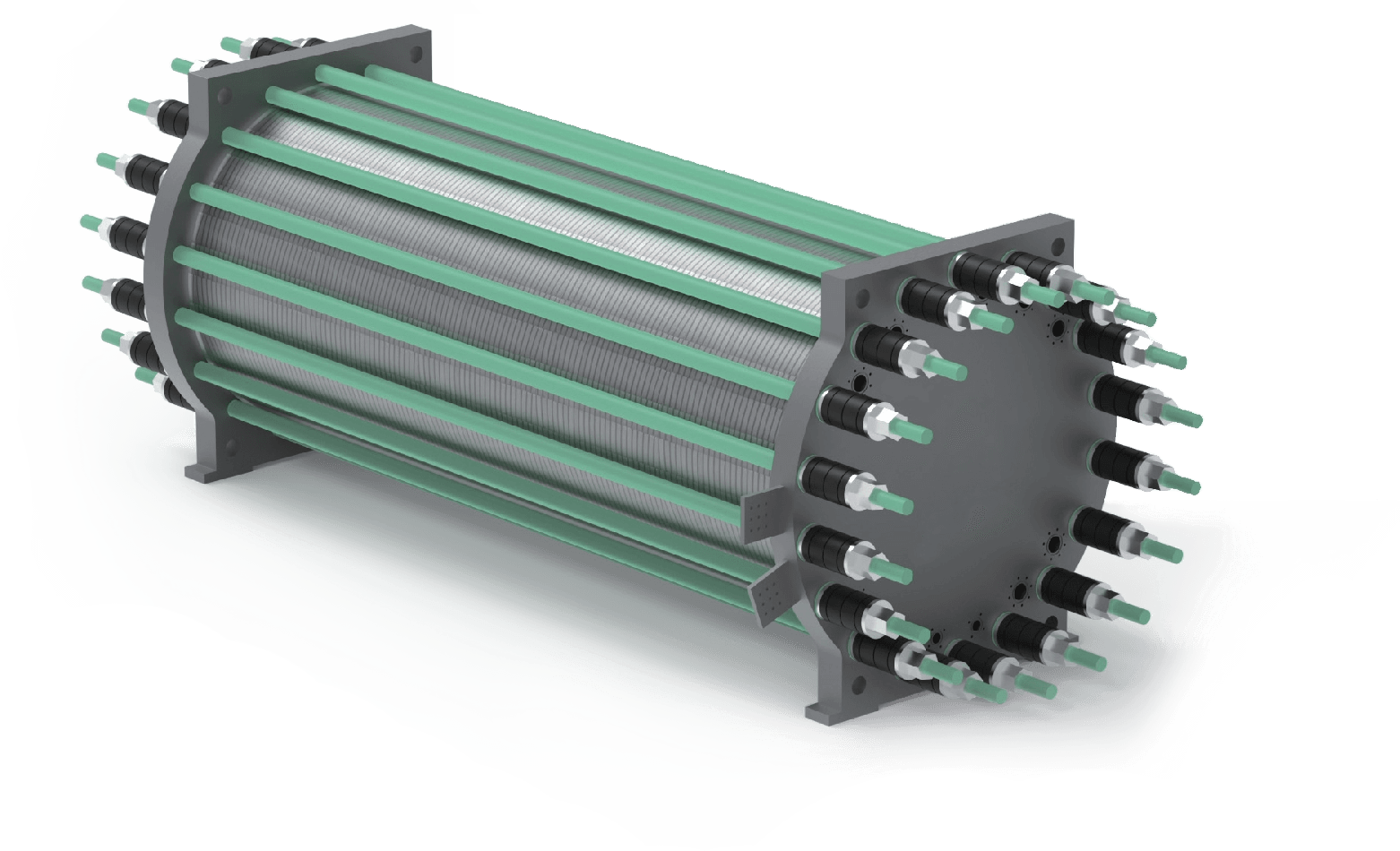
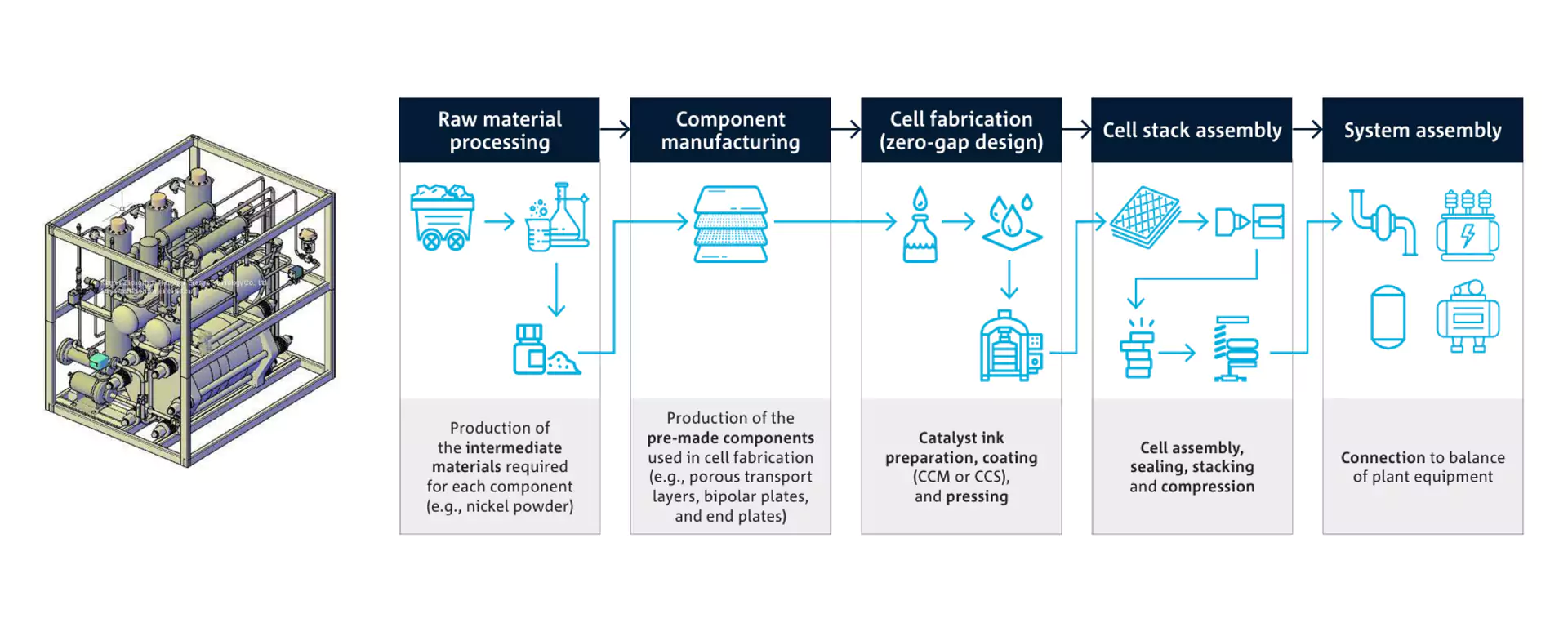
The alkaline electrolyser represents a cutting-edge solution for generating hydrogen by splitting water using an alkaline electrolyte. This innovative process produces hydrogen at the cathode and oxygen at the anode, separated by a durable diaphragm. Recognized for its reliability and cost-efficiency, alkaline electrolysers are a cornerstone of industrial hydrogen production and play a pivotal role in renewable energy systems, driving green hydrogen initiatives worldwide.
Send Inquiry
State-of-the-art optimized electrode structure combined with advanced nickel-plating techniques ensures superior performance and efficiency.
Incorporates new materials and processes to achieve higher current density while maintaining environmentally sustainable operations.
Features optimized gaskets and frame sealing within the bipolar plate design, significantly extending operational lifespan.
An optimized gas-liquid flow field delivers superior flow equalization efficiency for consistent and reliable performance.
Compact and meticulously engineered structure enhances heat exchange efficiency, ensuring energy-efficient operations in diverse applications.
With a focus on innovation, durability, and environmental sustainability, the alkaline electrolyser is a cornerstone technology for industries transitioning toward green energy, offering a reliable pathway to achieving global decarbonization goals.
Driving a greener future through innovation and technology by establishing a manufacturing of stack for following technologies
In house indigenous Manufacturing Capacity of Balance of plant for Electrolyser
| Capacity in MW | 250 kW | 500 kW | 750 kW | 1 MW | 1.5 MW | 2.5 MW | 4 MW | 5 MW |
|---|---|---|---|---|---|---|---|---|
| H2 Production Rate | 50Nm3/hr | 100Nm3/hr | 150Nm3/hr | 200Nm3/hr | 300Nm3/hr | 500Nm3/hr | 800Nm3/hr | 1000Nm3/hr |
| O2 Production Rate | 25Nm3/hr | 50Nm3/hr | 75Nm3/hr | 100Nm3/hr | 150Nm3/hr | 250Nm3/hr | 400Nm3/hr | 500Nm3/hr |
| Nominal Pressure | 1.6/3.2MPa | 1.6/3.2MPa | 1.6-2.5MPa | 1.6-2.5MPa | 1.6-2.5MPa | 1.6MPa | 1.6MPa | 1.6MPa |
| H2 Purity | 99.999% | |||||||
| Water Consumption | 1 kg/Nm3 | |||||||
| Power Consumption | 4.1 to 4.3 kW/Nm3 | |||||||
Our Alkaline Electrolyzers Technology Advantages:
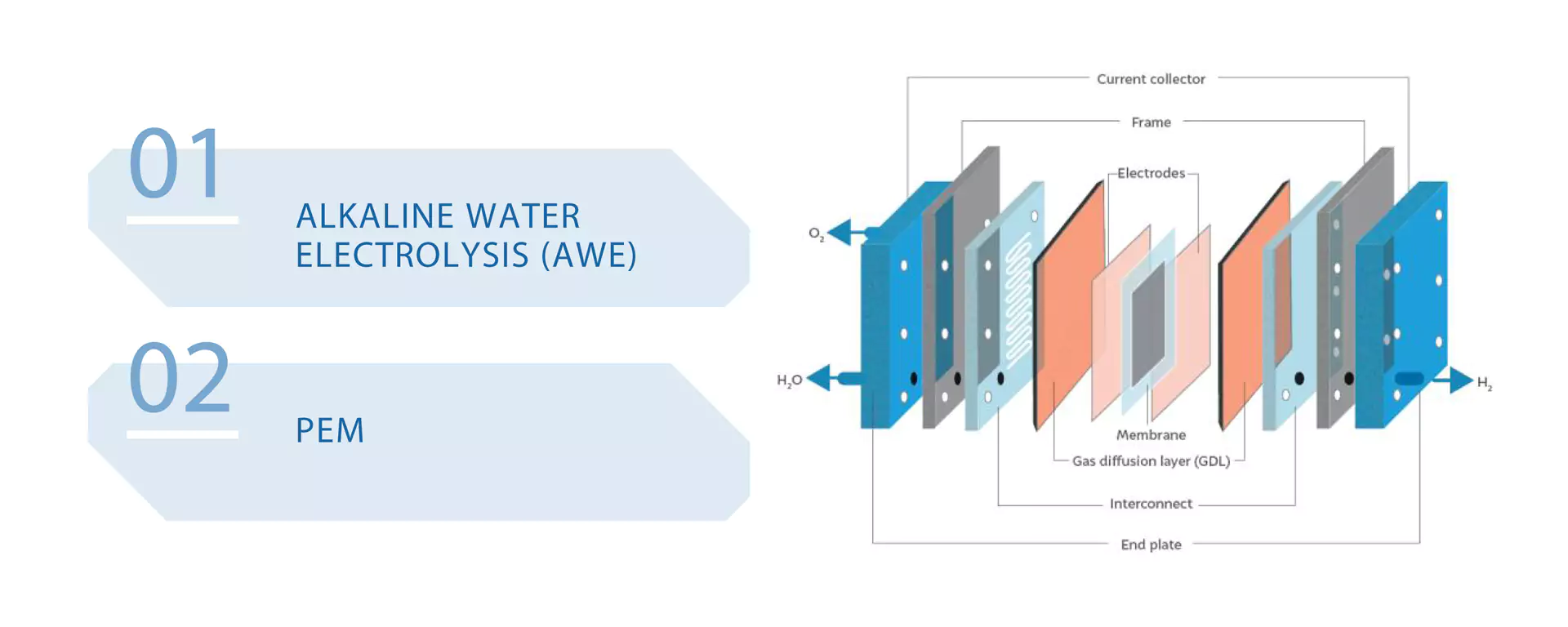
It’s straightforward conceptually. You pump water between two electrodes separated by a diaphragm, with potassium hydroxide solution as electrolyte. Electric current splits water molecules—hydrogen gas comes off at the cathode, oxygen at the anode. The diaphragm keeps them separated. Direct renewable electricity in means green hydrogen out. No carbon emissions from the process itself.
For industrial-scale production, alkaline is the practical choice. Uses simple nickel-based materials instead of precious metals. Scales to multi-megawatt sizes reliably. Has proven 20-30 year operating lifespans. PEM’s better for smaller, flexible applications responding to variable renewable input. But for big green hydrogen plants serving industrial customers? Alkaline is the technology that works. That’s why it dominates India’s SIGHT programme allocations. Proven, scalable, affordable.
250 kW up to 5 MW per unit. For bigger projects, we deploy multiple units in parallel. All our equipment—stack and balance of plant systems—is manufactured in India at our facility. So we control quality and can scale as India’s hydrogen demand grows.
Basically any major industrial process using hydrogen. Ammonia and fertilizer producers—currently importing hydrogen, need to shift to green. Petroleum refineries doing desulphurization and hydrocracking. Steel mills using green direct reduction. Methanol manufacturers. Glass makers. Semiconductor fabs. They all need high-purity hydrogen. India’s government specifically targeted these sectors for decarbonization under the National Green Hydrogen Mission.
Optimized nickel-plated electrode structures for better current distribution. Advanced diaphragm materials supporting higher current density. Improved sealing and gasket technology for longer stack life. Better gas-liquid separation efficiency. And both core stack and supporting systems manufactured in India, which matters for SIGHT programme indigenization requirements.
99.999 percent purity (5N grade) after purification and drying. That meets fuel cell vehicle standards, high-purity industrial requirements, and specialty gas markets. Oxygen co-product can also be captured if economics support it.