Aluminium Clad Wire Manufacturer
Aluminium Clad Steel Wires

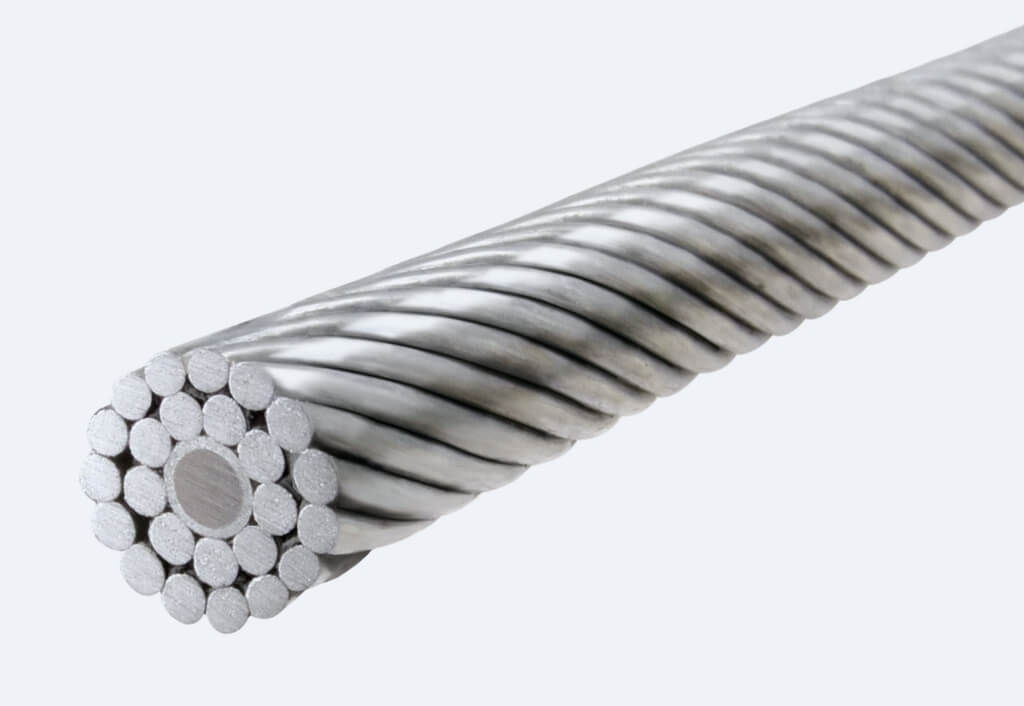
ACS, or Aluminium-Cladded Steel wire, is a conductor composed of an inner steel core and aluminium coating. Aluminium clad steel wire (ACS) wires are bimetallic wire with aluminium covered lines, covering the steel core continuously and evenly.

Send Inquiry
70,000 SQ.FT. Manufacturing
Facility at Kadi, Gujarat
1,700+ MPA Wire Strength
8,000+ KM Annual Capacity of
OPGW Manufacturing
14+1 High Speed Maximizing
Volume Stranding Lines
Automated UTM (Universal Testing Machine)
  • 500 KN Load Capacity
  • 250 MM Gauge Length
  • Advanced Testing Zero Tolerance

Advantages of ACS wire

Aluminium-clad steel (ACS) wire is superior to galvanized or aluminized steel in every way.

  • Better corrosion resistance.
  • More comprehensive range of combinations of tensile strength and conductivity
  • Light weight
  • Excellent thermal stability
  • Wider variety of products, with a broad range of properties, quality, and size of steel wire and aluminium cladding.

Our Manufacturing Facility

Advait Energy Transitions Limited is pleased to announce the commencement of operations at its state-of-the-art manufacturing facility located near Kadi, Gujarat. The 9,000-squaremeter plant is equipped with advanced production and testing capabilities, enabling us to deliver premium-quality ACS wire products that consistently exceed industry benchmarks.

Additionally, the facility houses a dedicated manufacturing unit for Emergency Restoration Systems (ERS), as well as an assembly and manufacturing line for stringing tools, consolidating our comprehensive range of products under one roof.

The facility houses advanced drawing machines with exceptional strength of 1700 MPA+, even in the smallest diameters. Our state-of-the-art 14+1 stranding equipment allows us to manufacture high-quality aluminium-clad wires and cables with exceptional efficiency.

The advanced automated UTM with a load capacity of 500 kN and a gauge length of 250mm, coupled with an intelligent video measuring machine capable of 130x magnification, ensures precise quality control down to 2 microns.

Advait Energy Transitions Limited’s strategic location, worldclass manufacturing capabilities, and dedicated team of skilled professionals position the Company as a leading provider of ACS wire solutions for utility and industrial applications globally

Enhancing Electrical Power Transmission

The Director’s Insight on Aluminum-Clad Steel (ACS) Wire in Overhead Transmission Lines

  • Understanding Overhead Transmission
    1. Overhead transmission lines, supported by towers or poles, form a network of conductors transmitting power from generating stations to distribution points or consumers. Key components include conductors, insulators, towers, and grounding systems, with the conductor playing a crucial role in system efficiency.
  • Efficiency and Conductivity of ACS Wire
    1. The choice of conductor material significantly impacts overhead transmission line efficiency. The global overhead conductor market, where ACS wire plays a significant role, was valued at around $ 22.4 billion in 2022 and is expected to reach $ 35.2 billion by 2027, growing at a CAGR of 7.6 percent. ACS wire, featuring a steel core coated with aluminum, combines steel’s strength with aluminum’s conductivity, markedly improving power transmission efficiency.
  • Reduced Thermal Expansion and Contraction
    1. ACS wire’s steel core reduces thermal expansion and contraction, maintaining proper tension in varying temperatures. This characteristic minimizes the risk of sagging or stretching, ensuring stability in the transmission system.
  • Corrosion Resistance and Longevity
    1. Crucial for a reliable power distribution network, ACS wire’s aluminum coating provides exceptional corrosion resistance, extending the conductor’s lifespan and reducing maintenance needs.
  • Enhanced Mechanical Strength
    1. The mechanical strength of ACS wire, derived from its steel core, contributes to the robustness of overhead transmission lines. This strength withstands mechanical stresses induced by environmental factors, reducing downtime and improving overall reliability.
  • Environmental Considerations
    1. ACS wire aligns with sustainability by using highly recyclable aluminum. Its recyclability requires less energy than primary production, contributing to reduced carbon emissions and environmental impact. This approach supports the industry’s shift towards greener practices. In summary, ACS wire is pivotal for efficiency, reliability, and environmental sustainability in overhead transmission lines.

Application of ACS Wire

Aluminium-Cladded Steel wire is generally used for long-term transmission lines in coastal and island areas, other tropical and subtropical regions, dense fog regions, and highly polluted areas where corrosion resistance is required. As an alternative to galvanized steel wire, ACS wire is a game-changer due to its strength and corrosion resistance. ACS wires have been used in a variety of applications, including –

Major Applications : Armor Wire of OPGW, The Steel Core Of Conductor ACSR/AW, Messenger Wires.
Other Applications:  Guy Wires, Web Application, Barbed Wire, Grape Vineyards.

Send Inquiry

FAQs for ACS (Aluminium Clad Steel) Wire

ACS is two metals bonded together in strong steel core with an aluminum coating. The bonding’s metallurgical, not mechanical. That means the layers can’t separate. We create it through hot extrusion, fusing aluminum to steel at the molecular level. It’s fundamentally different from just coating steel with zinc or aluminum. We’re creating an integrated material where the two metals become one unit.

ACS gives you aluminum-level corrosion protection, which absolutely demolishes galvanized steel in harsh environments. In coastal areas, humid tropical zones, or near industrial pollution, galvanized ground wires corrode significantly in 15-20 years. ACS wires in the exact same conditions? 40+ years easily. Plus you eliminate galvanic corrosion that’s the electrochemical decay that happens when different metals touch in humid conditions. ACS is one material, so no electrochemical issues. In coastal India, ACS is a no-brainer.

ACS is monolithic – aluminum and steel bonded as one permanent unit. ACSR (Aluminum Conductor Steel Reinforced) wraps separate aluminum strands around a steel core. They’re mechanically combined but stay distinct materials. In humid or salty environments, that interface becomes a corrosion hotspot because of electrochemical action. ACS eliminates that weakness entirely. It’s a superior material, especially for challenging environments.

ACS is the core material in ACSR/AW conductors. It’s the outer layer in OPGW cable. And it’s the primary ground wire on transmission lines anywhere corrosion is a real concern of coastal routes, long river crossings, tropical zones, pollution-heavy industrial areas. Anywhere engineers think ‘we need this to last 40+ years in a harsh environment,’ ACS becomes the default choice. Once people understand the material, they prefer it over cheaper alternatives.

We’ve got 14 high-speed production lines at Kadi producing ACS wire at ultra-high tensile strengths. We can support 8,000+ kilometers of OPGW production annually. Quality-wise? We have a 500 kilonewton Universal Testing Machine and video measuring equipment checking to 2-micron accuracy. That precision capability is rare. Most cable manufacturers can’t match it. We maintain tolerances that ensure perfect fit in OPGW applications.

IEC, ASTM, ANSI, GOST, whatever the customer needs. That multi-standard capability is why we export globally. Customers in different countries have different procurement specs, and we meet all of them. Combined with our testing infrastructure and consistent quality, that’s why we’re credible internationally. We don’t just manufacture, we manufacture to exacting standards that customers can depend on.