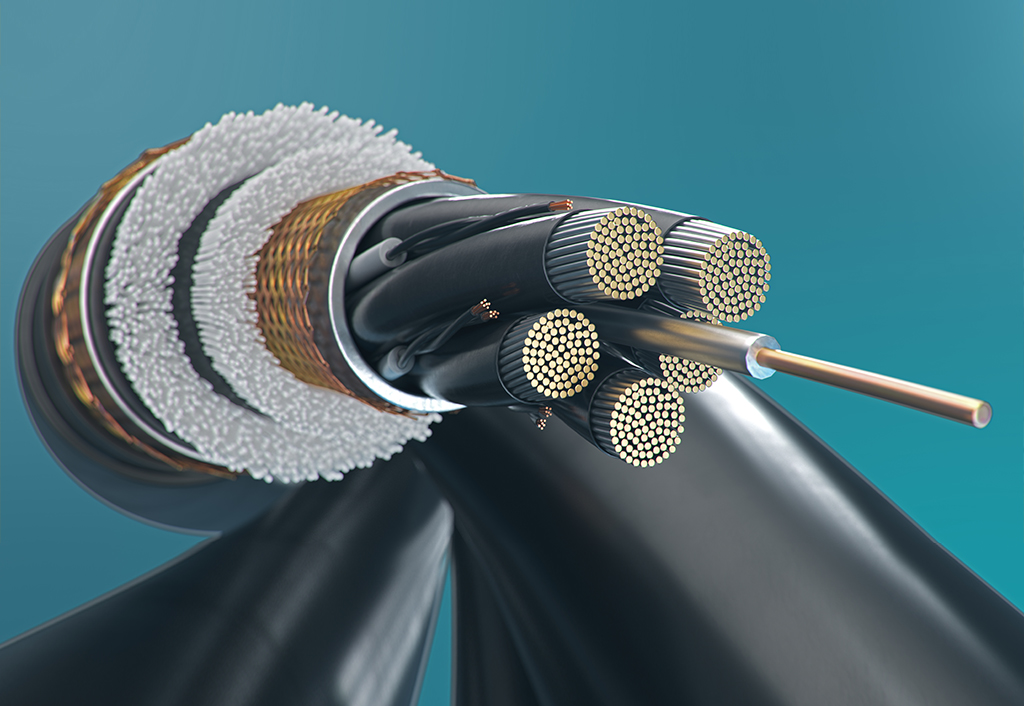
OPGW Fiber Optic Cable
OFC cables

High-speed internet access is now essential for consumers and organizations in the digital world. Due to its capacity to offer quicker data transfer speeds and improved connection, optical fibre cables (OFC) have emerged as the preferred option for sending huge amounts of data across long distances.

Leading producer of OFC cables in India, Advait Energy Transitions Limited provides a variety of goods to satisfy the needs of people, companies, and governmental organisations. In this post, we shall give an outline of Advait Infratech Limited’s OFC cables, their characteristics, and their applications.

Send Inquiry

What are OFC Cables ?

OFC cables are fibre-optic cables that consist of one or more optical fibers enclosed in protective jackets for strength and durability. These cables are designed to transmit large volumes of data over long distances at high speeds using light waves. OFC cables provide superior connectivity and faster data transfer rates compared to traditional copper cables.

Features of the OFC Cables from Advait Energy Transitions Limited

  • Durability

    The OFC cables from AAdvait Energy Transitions Limited are made to survive tough conditions, including freezing temperatures, dampness, and physical damage.

  • Cost-effective

    While OFC cables may initially cost more than conventional copper cables, they end up being a more affordable investment in the long term due to their higher performance and durability.

  • High-speed data transfer

    Advait Energy Transitions Limited’s OFC cables provide high-speed data transfer rates, making them ideal for applications that require large volumes of data to be transmitted quickly.

  • Superior connectivity

    OFC cables provide superior connectivity compared to traditional copper cables. They are less prone to interference and signal loss, ensuring reliable data transfer.

  • High-speed data transfer

    The OFC cables from Advait Energy Transitions Limited have high data transfer rates, making them perfect for applications that send huge amounts of data fast.

Applications of Advait Energy Transitions Limited's OFC Cables

Advait Energy Transitions Limited’s OFC cables are used in a wide range of applications, including:

  • Telecommunications

    OFC cables are used extensively in telecommunications networks to provide high-speed internet connectivity and reliable communication.

  • Broadcasting

    OFC cables are used in broadcasting networks to transmit video and audio signals over long distances.

  • Military and defense

    OFC cables are used to provide secure and reliable communication in military and defense applications.

  • Medical uses

    OFC cables are used in medical equipment to transmit images and data between devices.

The Benefits of OFC Cables

Compared to conventional copper cables, OFC cables provide a number of benefits, including:

  • High-speed data transmission

    Compared to copper connections, OFC cables offer quicker data transfer speeds, making them the best choice for applications that need to send large amounts of data quickly.

  • Superior connectivity

    OFC cables have lower sensitivity to signal loss and interference, ensuring dependable data flow.

  • Longevity

    Compared to copper cables, OFC cables have a longer lifespan, making them a long-term investment that is cost-effective.

  • Security

    OFC cables are the best choice for applications that require secure communication since they offer a dependable and secure method of data transmission.

Our Manufacturing Facility

M/s TG Advait India Pvt. Ltd. is a Joint Venture company between M/s TGC China & M/s Advait Energy Transitions Limited., Ahmedabad. (Advait). M/s TGC is supplying OPGW in India since the year 2011 to Power grid, GETCO, MPPTCL and multiple Public & Private Companies. M/s TG Advait India Pvt. Ltd., Ahmedabad, (TGA) is a Indian Subsidiary Company of M/s Jiangsu Tongguang Optical Fibre Cable Co., Ltd., China. (TGC). The Manufacturing plant of M/s TG Advait India Pvt. Ltd. is located at Sanad – II GIDC-Gujarat and is 35KM away from Ahmedabad.

This factory is ISO-9001, ISO-14001 & ISO-18000 Certified. Our State-of-the-Art Manufacturing Facility has a capacity of manufacturing OPGW, OFC & ADSS Cables and is equipped with all the required Test & Measurement Equipment required for conducting Factory Acceptance Tests and as well as Type Tests.

Our Testing Facility is NABL Accredited. And we are trained and Capable manpower to perform Type Tests of Fiber Optic Cable in our Premises under Indian / Internatational Standard.

Send Inquiry

OPGW Fiber Optic Cable Solutions for Modern Transmission Networks

Power transmission networks work differently now than they used to. OPGW fiber optic cable changed the game by putting grounding protection and Fiber optic data transmission into one cable instead of needing multiple separate systems. Anyone working with transmission infrastructure in India needs to understand what OPGW fiber optic cable does and why it matters.

What Makes OPGW Fiber Optic Cable Different?

The basic concept behind OPGW fiber optic cable is genuinely smart. Old transmission setups needed one cable for grounding and a separate system for getting data around. OPGW fiber optic cable fixes that by putting the Fiber optics right inside the ground wire itself. One cable handle both jobs. That’s it. That’s the whole thing.

The benefits are obvious once you think about it. OPGW fiber optic cable means utilities don’t need to run multiple cables everywhere. That saves money. Less installation work. Easier to maintain. Less environmental disruption. OPGW fiber optic cable works just fine whether you’re dealing with salty coastal air or Extreme Mountain conditions. It’s tough stuff. That’s why OPGW fiber optic cable makes sense for India’s different regions and tough environments.

Real-World Performance of OPGW Fiber Optic Cable

OPGW fiber optic cable has been out there in the field for years across thousands of kilometres. It delivers the speeds that modern power grids need. When utilities run smart grids, they need constant real-time data moving through the system. With solar and wind power bouncing around unpredictably, you need monitoring happening all the time. OPGW fiber optic cable handles that job without adding extra cables everywhere.

Quality manufacturing matters a lot with OPGW fiber optic cable. The Fiber needs protection. The materials need to handle decades of use. Testing labs verify that OPGW fiber optic cable meets international standards before it even gets deployed. That’s how utilities know it’s going to last and perform properly.

Why OPGW Fiber Optic Cable Drives Infrastructure Growth?

Governments are requiring OPGW fiber optic cable on major transmission projects now. The Reliable Communication Scheme recognizes that OPGW fiber optic cable improves how grids operate while getting internet to areas that didn’t have it before. Two benefits from one cable. That’s why adoption is accelerating.

Smart utilities get it. OPGW fiber optic cable means one installation instead of several. Projects move faster. Operating costs drop. OPGW fiber optic cable solves the real problems that utilities face every day while supporting India’s infrastructure future.

FAQs for OPGW Fiber Optic Cable (OFC)

OPGW and OFC are basically the same thing we just use both terms depending on who we’re talking to. It’s that overhead cable on top of transmission towers that gives you both ground protection and fiber optics. Utilities install it when they need both lightning protection and the ability to send data signals across their transmission network without building separate infrastructure. It’s standard on modern transmission systems where utilities expect to handle growing communication demands and maybe even rent out spare capacity.

This is actually kind of elegant. You’ve got that metallic sheath either stainless steel or aluminum-clad steel – wrapping everything. That sheath does three things simultaneously. One: it eats up fault currents without passing them to the fibers. Two: it shields the fibers from the insane electromagnetic fields all around those power conductors. Three: it protects against mechanical stress – wind, ice, temperature swings, all that nasty stuff. The beauty is that fiber itself is naturally immune to electromagnetic interference anyway, so you get shielding on top of an inherently EMI-proof technology. It’s a really solid design.

Single-mode fiber in OPGW cables? You’re looking at over 100 kilometers before signal starts getting weak. No repeaters needed across most transmission corridors. That’s why fiber optics absolutely changed the game for power grid communication. Utilities can span huge distances without signal boosting. It’s one of those technologies that just works, which is refreshing.

Central tube is straightforward to all fibers in one gel-filled tube at the center. Simple design, bulletproof, works great if you don’t need tons of fibers. Multi-loose tube spreads fibers across different tubes inside the cable. You get better flexibility if you need higher fiber counts or if you think you might need to splice or reroute fibers down the line. Big transmission projects almost always go multi-loose because it scales better and gives you more future flexibility. Plus, if something goes wrong with one tube, you don’t lose everything at once.

Oh absolutely. Beyond just carrying telecom signals, OPGW can handle distributed temperature sensing that watches for hotspots on the line in real-time. It’s the backbone for SCADA systems, synchrophasors, teleprotection relays, smart metering infrastructure of basically all the brains that modern grids need. With India pushing toward smarter, more responsive grids, OPGW is shifting from being a nice-to-have to essential infrastructure. The government’s investing seriously in this stuff, so it’s definitely the direction things are going.